Free Tools & Resources
Everything You Need to See What's Broken and Fix It.
These tools are used inside real $1M–$20M businesses. Pick the one that matches where you're stuck, and start there.
Free Tools
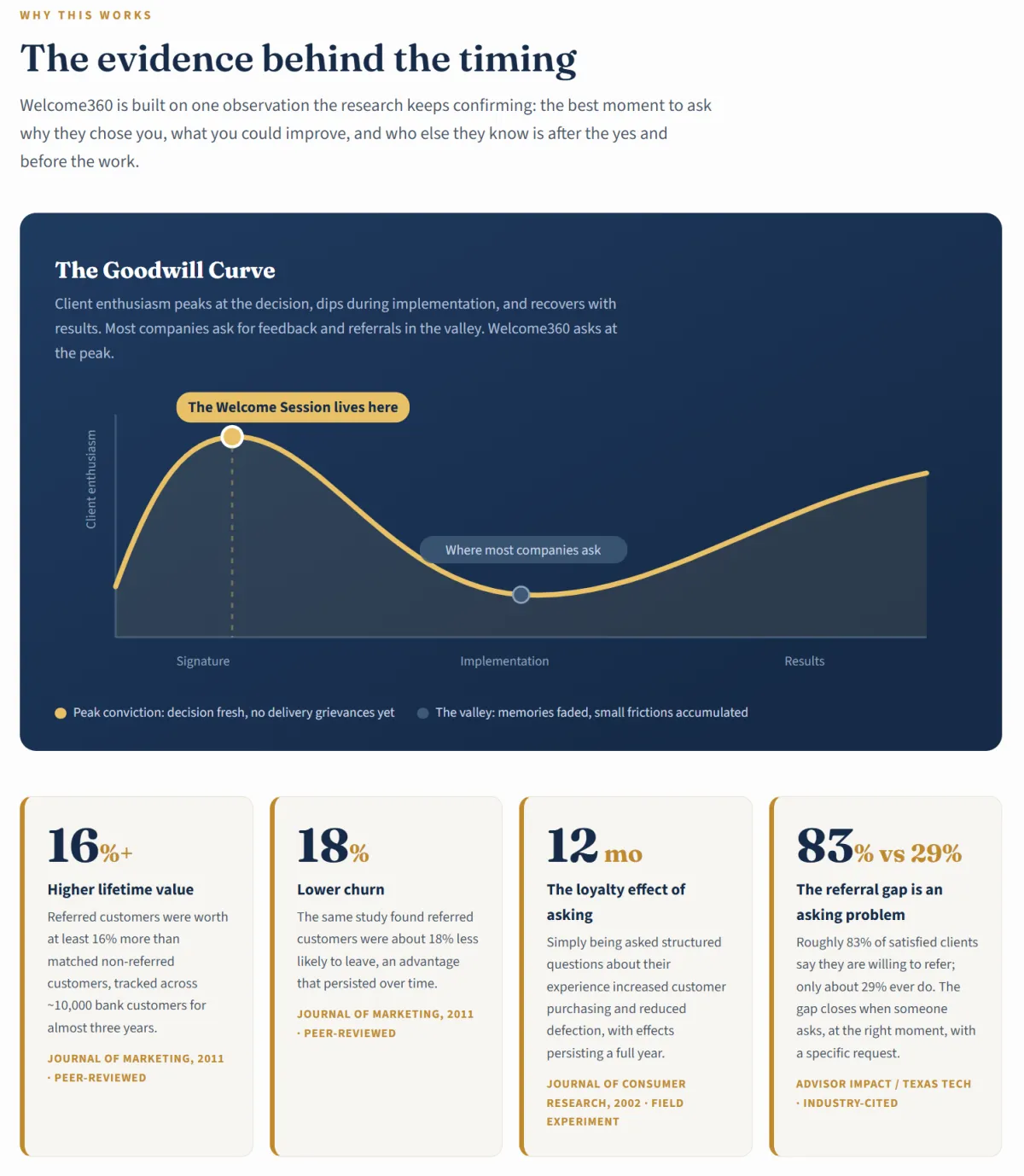
Welcome360 • A Client Growth System: The 45-Minute Meeting That Turns Every New Client Into Referrals.
Discover how the Welcome360 System reveals the exact strategies to:
Ask for Referrals at Peak Goodwill — Before the Honeymoon Ever Fades
FREE AI Insight Miner: Turn One Client Conversation Into 7 Finished Business Assets
Capture the Exact Words Clients Use to Sell You (Then Reuse Them Everywhere)
Close the Feedback Loop That Makes Clients Refer Twice
Sellthrough360 - Flows, Bundling, Upselling Systems for Revenue Generation
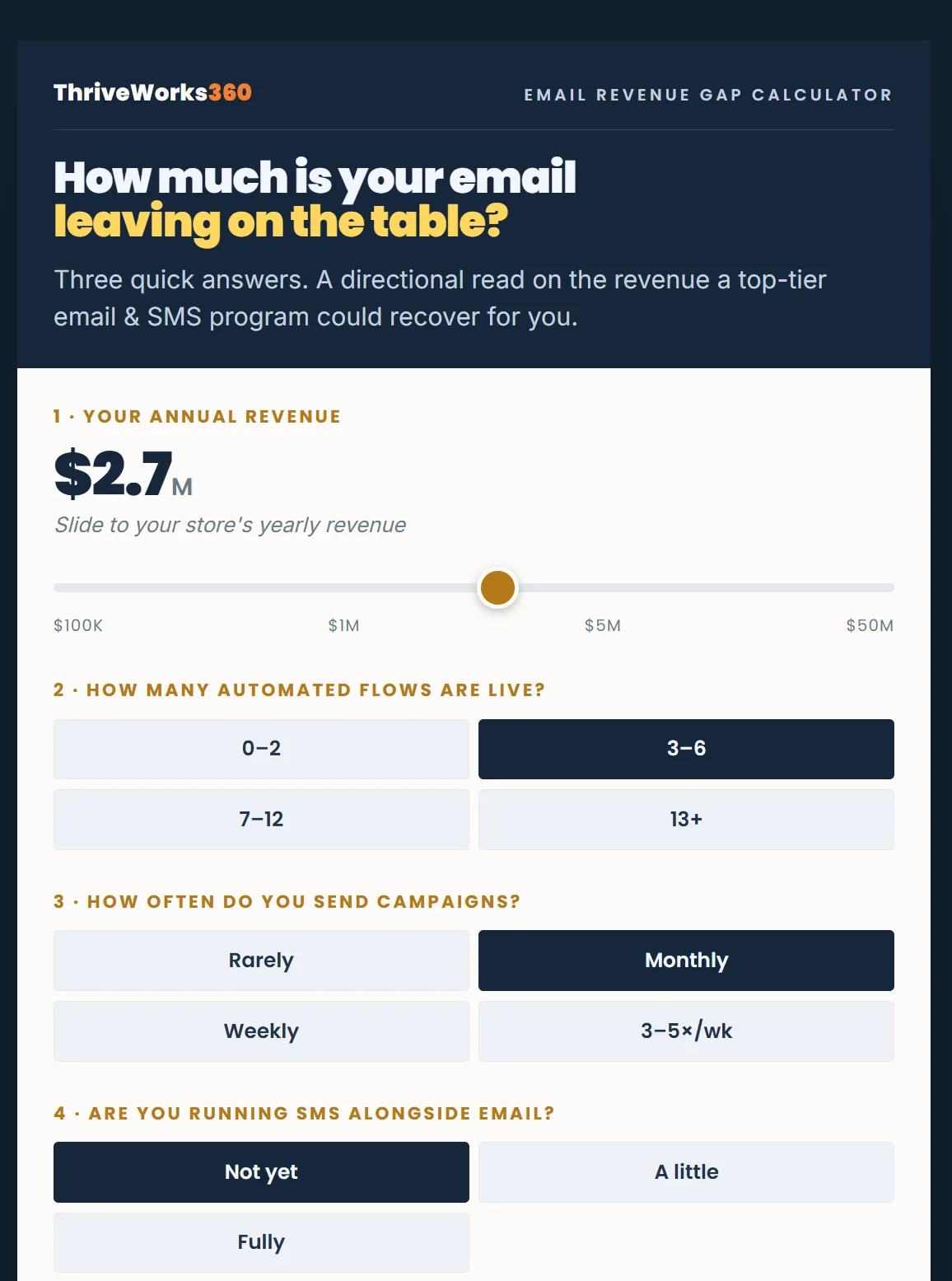
How much is your email leaving on the table?
Three quick answers. A directional read on the revenue a top-tier email & SMS program could recover for you.
Your annual revenue
How many automated flows are live?
How often do you send campaigns?
Are you running SMS alongside email?
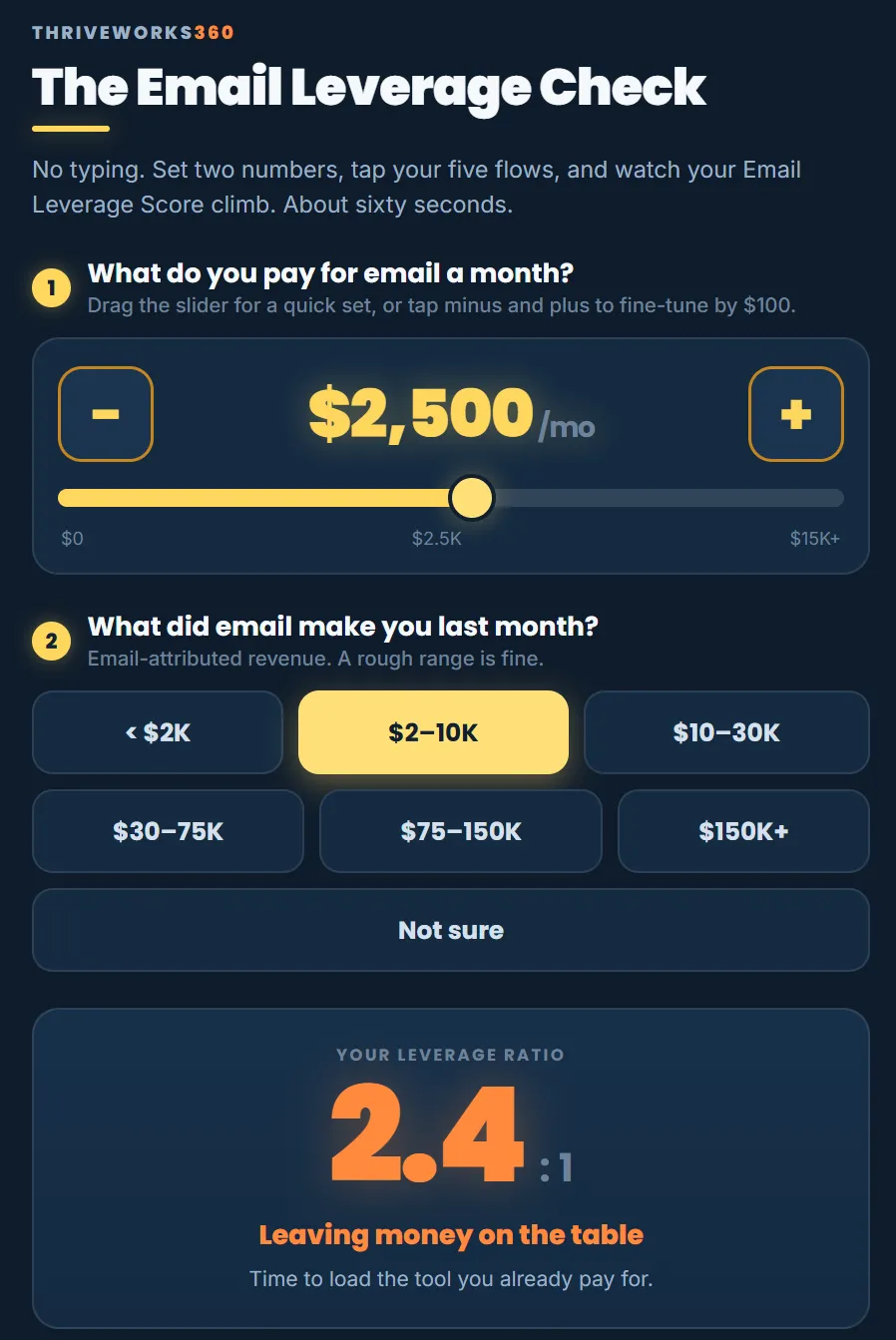
The Email Leverage Check
No typing. Set two numbers, tap your five flows, and watch your Email Leverage Score climb. About sixty seconds.
What do you pay for email a month?
What did email make you last month?
Which of these 5 are running?
Download a printable form
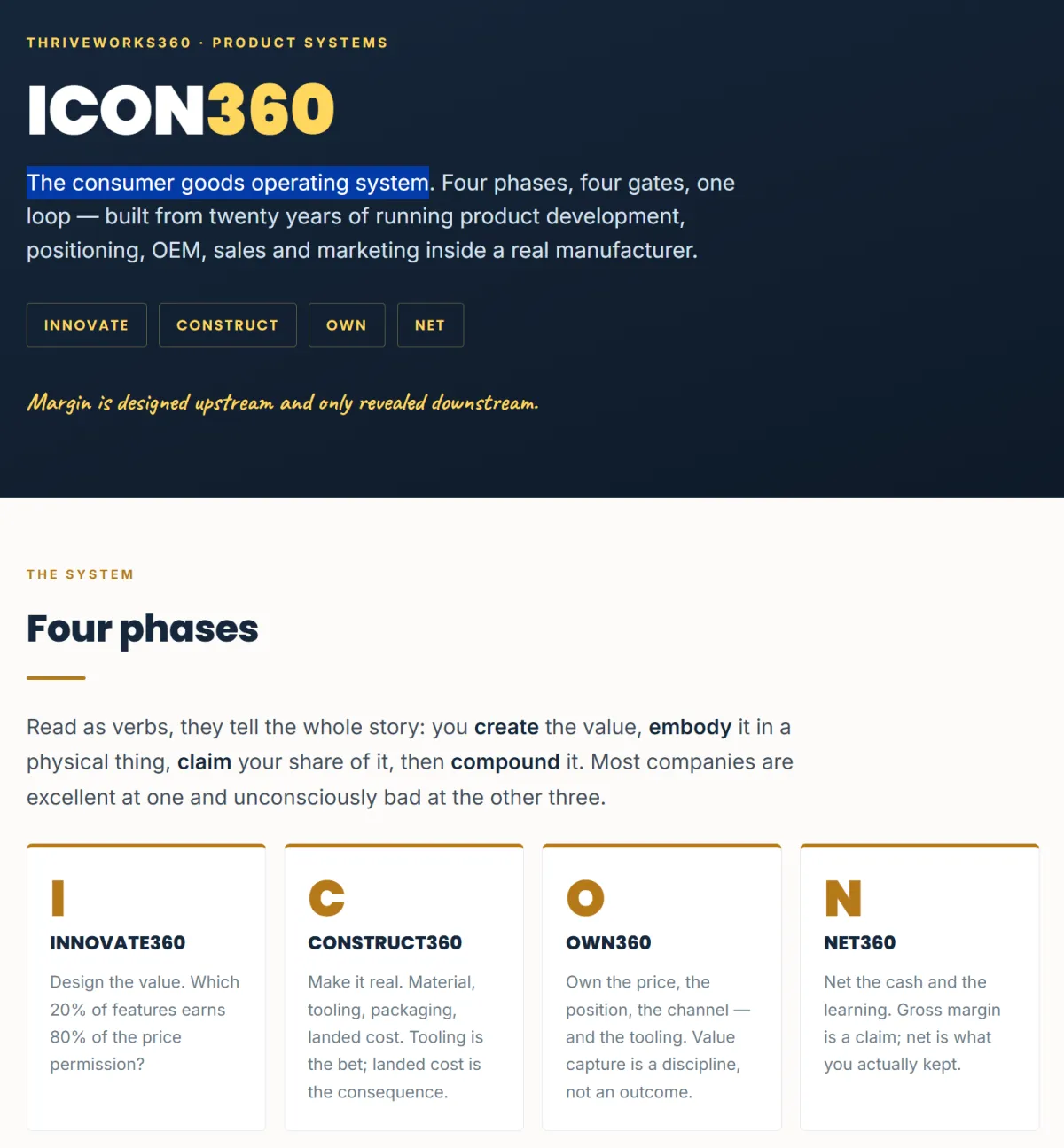
ICON360
The consumer goods operating system.
INNOVATE360 - Design the value. Which 20% of features earns 80% of the price permission?
CONSTRUCT360 - Make it real. Material, tooling, packaging, landed cost. Tooling is the bet; landed cost is the consequence.
OWN360 - Own the price, the position, the channel — and the tooling. Value capture is a discipline, not an outcome.
NET360 - Net the cash and the learning. Gross margin is a claim; net is what you actually kept.
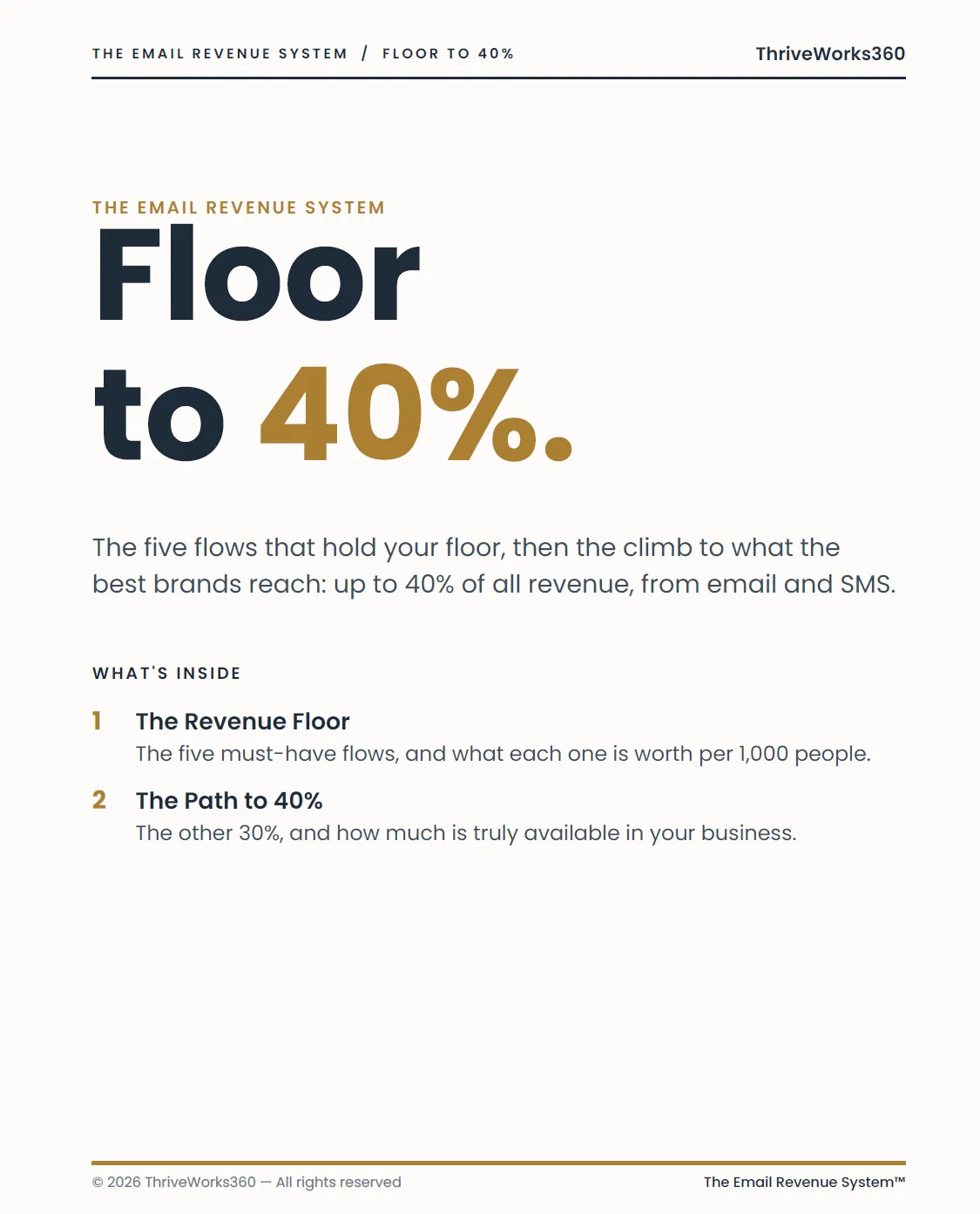
The Email Revenue System Floor to 40%.
The five flows that hold your floor, then the climb to what the best brands reach: up to 40% of all revenue, from email and SMS.
The Revenue Floor - The five must-have flows, and what each one is worth per 1,000 people.What did email make you last month?
The Path to 40% - The other 30%, and how much is truly available in your business.

See the money already in your business, climbing in real time.
Slide in your two numbers, then answer 15 quick questions. Watch the dollar figure move as you go. By the end, you'll know your biggest pocket of found money, the fastest switches to flip, and roughly what it's worth — before you spend a cent on new ads.
Your List
Your Automations
Your Repeat Buyers
Your Offers & Pricing
Your Between-Launch Revenue
Answer all 15 to lock your result
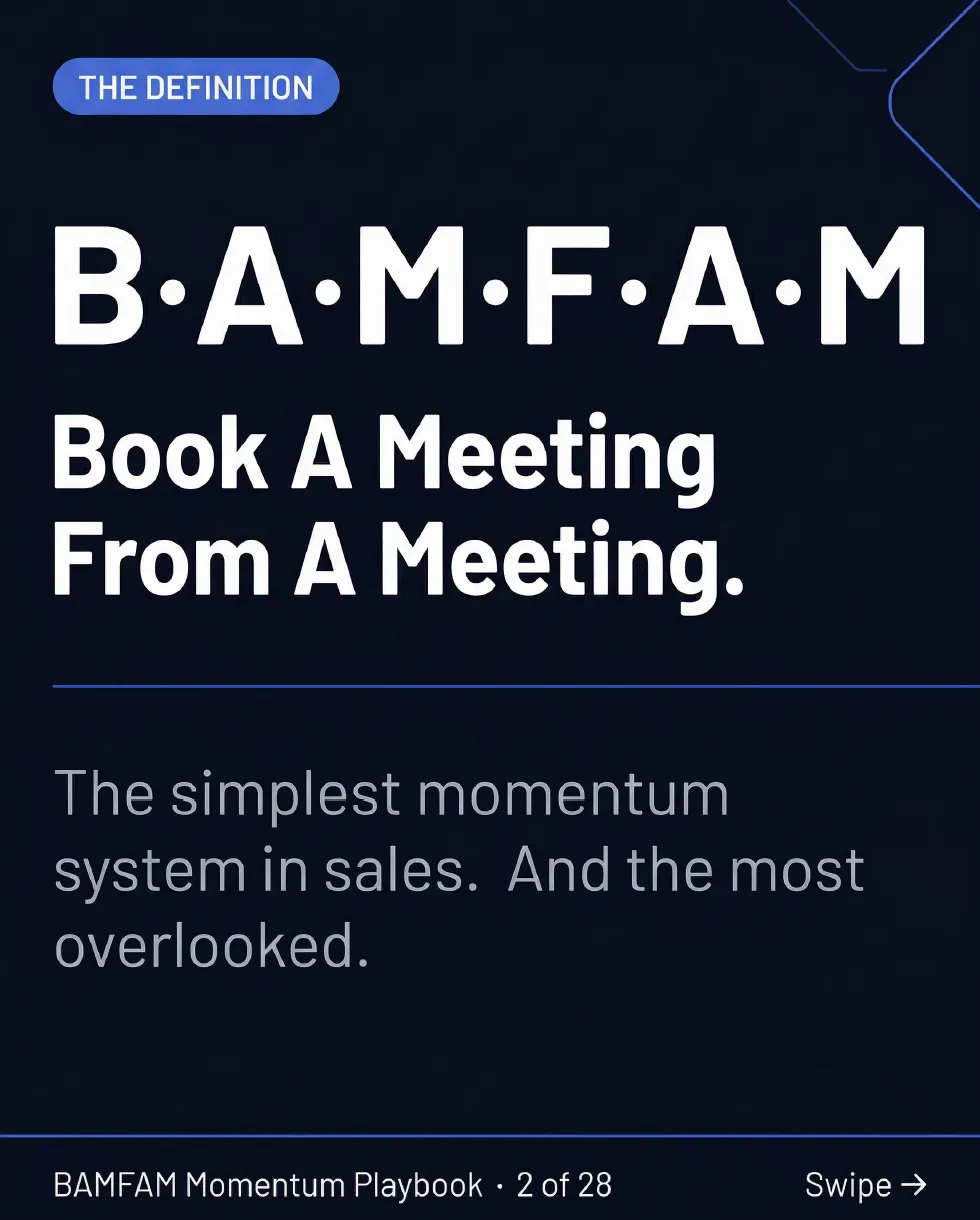
Connect • Clarify • Confirm • Calendar: The 4-Beat Playbook That Ends the Follow-Up Chase.
Discover how the BAMFAM Momentum Playbook reveals the exact strategies to:
Book the Next Meeting While You're Still in the Meeting
Turn "Let Me Get Back to You" Into a Yes (It's Friction, Not Rejection)
Kill the "Just Bumping This Up" Email Forever
Make Momentum Measurable With the Team Scorecard
Stop • Scan • Decide: The 3-Step Playbook to Win the First 51 Seconds.
Discover how the FOCUS360 Playbook reveals the exact strategies to:
FREE GPT Agent to test and build your content
Stop the Scroll on Command
Hold Attention for the First 51 Seconds:
Multiply Conversions With a Single Clear Path:
Unlock Your Business’s Full Potential – Without the Pain
Step into the realm of effortless growth with our P.A.I.N.-L.E.S.S. Playbook.
Designed for entrepreneurs who seek the "Golden Nuggets" that transform them and their businesses without the overwhelming stress. This tool shows a simple and streamlined path toward business success.
Take Control of Your Journey with Our Ultimate FREE Autopilot 360 System Masterclass and Cheat Sheet.
Build A Self-Managed Business And Break Through 6-7 Figures To 8 Figures While Seamlessly Producing Huge Profits!


Uncover Hidden Revenue in 3 Simple Steps
See more details about how this impacts business performance.
PAID COURSE
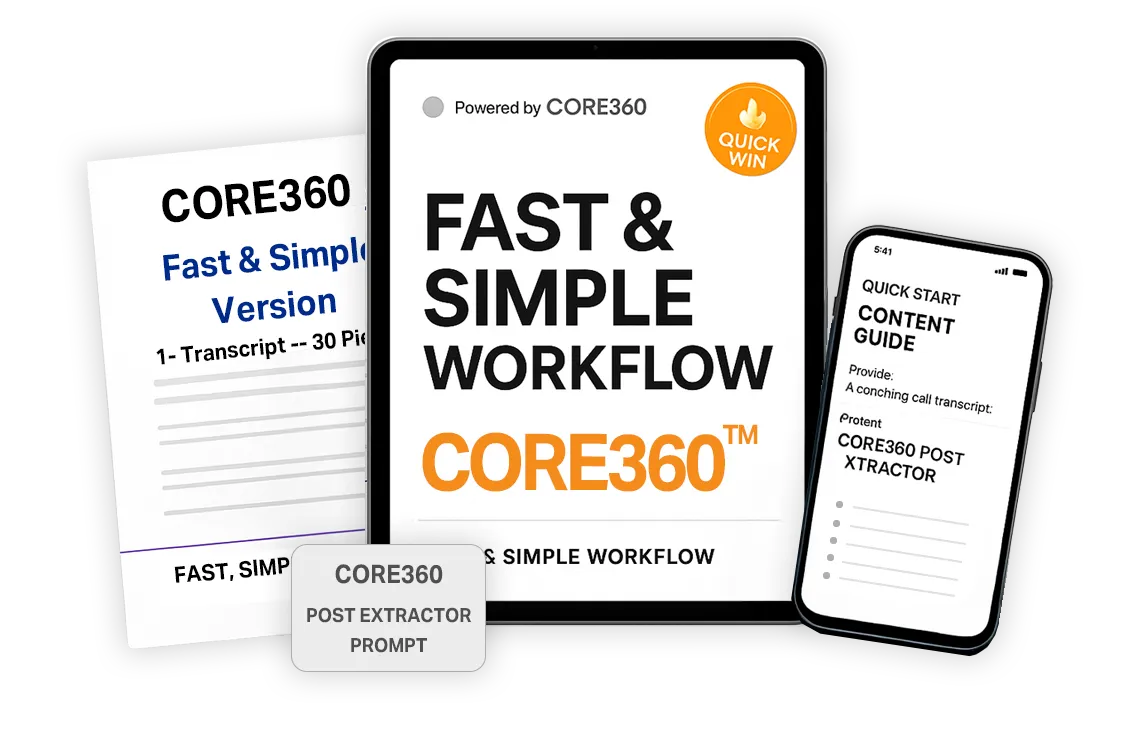
CORE360: Multiply Your Message — Without Writing a Single Word
See how to easliy increase your visibility with the CORE360 System and AI-driven Prompt Booster Pack™
Built for founders and entrepreneurs who already say brilliant things — this AI-optimized vault gives you the exact prompts to turn one voice note into days of content across Instagram, LinkedIn, TikTok, YouTube Shorts, and Facebook.
No burnout. No blank pages. Just scroll-stopping content formulas that match your voice and work on every platform.
A simple upgrade with exponential reach.
BLOG
When Everything Gets Escalated, Nothing Is Truly Delegated
You can hand off every task on your list and still be the bottleneck. Because the thing your team keeps bringing back to you isn't the work. It's the decision.
There's a strange moment in the growth of a business when being needed stops being a good thing.
Early on, it feels like a strength. Your team comes to you because you know the customers, you remember why things were decided the way they were, and you can tell in a second which problems can wait and which ones can't. You approve the work. You solve the odd ones. You answer the questions nobody else can.
And because you're good at it, the business keeps growing.
Then it flips. More customers, more decisions. More employees, more questions. And instead of growth buying you freedom, it just adds another layer of things that route through you.
Most founders, at that point, reach for the obvious fix. Delegate more. Hand off the tasks. Get things off your plate.
So they do. And somehow they're still the bottleneck.
Here's why. You didn't have a task problem. You had a decision problem. And those get solved in completely different ways.
Handing Off the Task Doesn't Hand Off the Dependency
Most CEOs who feel buried in daily operations assume it's a delegation issue. Sometimes it is. But delegation alone rarely fixes founder dependency, because you can hand off a task and still own everything around it.
You still explain how it should be done. You still answer the questions halfway through. You still approve the result, sort out the exceptions, and check whether it actually happened.
The task moved. The dependency didn't.
Watch how it usually plays out. A customer issue reaches an employee. They're not sure how much authority they have, so they ask a manager. The manager doesn't want to make the wrong call, so it climbs to you. You solve it in three minutes.
Problem solved, right? Not quite.
Because if the same kind of issue comes back next week and takes the exact same path, the business learned nothing. You just completed another task. The real question was never "how do I handle this faster?" It's "why did this decision need to reach me at all?"
The Difference Between a Task and a Decision
This is the piece most delegation advice skips. There's a real gap between handing someone a task and handing them a decision.
"Handle customer issues" is a task.
"Resolve customer issues below this threshold using these guidelines, escalate these three specific exceptions, and log the outcome here" is ownership.
The first one sounds like delegation. But because the boundaries are vague, the employee still has to guess where their authority ends. And when people aren't sure where the line is, they do the safe thing. They escalate.
That's the quiet engine behind founder dependency. Not laziness. Not a weak team. Just a hundred small gray areas, and one person who's always been the safest place to bring them.
When Everything Gets Escalated, Nothing Is Delegated
Here's the trap in one sentence. If every gray area travels upward, you haven't delegated anything. You've just installed yourself as the final answer for the whole company.
And it compounds. The more you say yes to being the decider, the more your team learns to bring you decisions. The more they bring you, the busier you get. The busier you get, the slower everything moves, because it's all waiting on your attention.
A growing company can't treat every call like a founder-level call. When everything is important enough to escalate, nothing is genuinely owned by anyone else.
The fix isn't to tell people to "step up" or "take more initiative." Those are personality words for a structural problem. The fix is to draw the lines clearly enough that they don't have to guess.
Draw the Decision Lines
Giving people ownership means answering three questions out loud, for the decisions that keep landing on your desk.
What can the team decide on their own, no approval needed? What requires a manager to weigh in? And what is genuinely important enough to reach you?
Once those lines exist, most of the gray areas resolve themselves without you. People stop escalating out of fear, because they know exactly where their authority ends and what to do inside it. The exceptions that do reach you are the ones that actually deserve your attention, instead of the fifth "quick question" of the afternoon.
This is also why you can't fix escalation by just writing down steps. A checklist tells people how to do the work. It doesn't tell them what they're allowed to decide. You need both. The process, and the authority to run it.
Find Where the Business Waits for You
You don't have to redesign the whole company at once. Start where the dependency is loudest.
Look back over the last few weeks. Where did your team need your answer before they could move? Which approval requests kept showing up? Which problems felt oddly familiar? What did you explain more than once? What stopped the moment you were unavailable?
Those aren't just interruptions. They're signals. Each recurring one points at a missing decision rule, a boundary nobody drew, or information your team couldn't reach without you.
Make a simple list of the things that keep bouncing back to you. Then sort each one with three questions. Do I actually still need to own this? Could someone else own it with clearer guidelines? Or is this genuinely a founder-level call?
You'll usually find the problem isn't how much work there is. It's how the decisions around that work were designed to flow.
Founder Freedom Isn't Founder Absence
Worth clearing up one misconception, because it stops a lot of founders from ever starting.
The goal isn't to make yourself irrelevant. You still have a job. It's just that the job should increasingly be direction, strategy, leadership, and growth, instead of being the company's human routing system for decisions other people are perfectly capable of making.
Founder freedom means you get to choose where your attention creates the most value. It means stepping into a strategy meeting without wondering whether five small approvals are stacking up behind you. It means trusting the business to keep deciding well while you're out for the day, because the decisions run on clear rules instead of your constant presence.
That's a different kind of control. In a founder-dependent company, control comes from being personally involved in everything. In a company with clear decision ownership, control comes from knowing the rules are sound and the right calls are being made without you in the room.
The Test Is Simple: What Decisions Wait for You?
There's one honest question that measures this. Not "what stops when I step away?" but the sharper version underneath it.
What decisions wait for you?
Not what gets slightly less convenient. What actually stalls until you weigh in? Which approvals pile up? Which employees freeze because they're not sure they're allowed to act?
Those answers show you exactly where the business still runs on a person instead of a rule. And that's your starting list.
You don't build a business that runs without you by disappearing from it. You build it by pulling yourself, one decision at a time, out of calls that never really needed you in the first place.
Build the Business Around the Decisions, Not the Founder
If your team still needs you to make the routine calls, the answer probably isn't another hire or another tool. It's getting clear on exactly where the decisions pile up on you, and why.
That's what FLOW360 is for. It helps surface the workflows, handoffs, and recurring decisions that keep leadership stuck in the day-to-day, then draws the ownership and decision rules that let the team move without you.
Start with one decision that keeps coming back to you. Figure out who should really own it, what guidelines they need to own it well, and which few exceptions genuinely deserve to reach you. Then do it again with the next one.
One clear decision line at a time, the business stops waiting on you and starts running on the structure you built.
And that's where founder freedom actually begins.
See exactly which decisions keep routing back to you. Book a free 30-minute discovery call maps the recurring decisions, handoffs, and gray areas keeping you stuck in daily operations, and shows you where to draw the first ownership line so your team can move without waiting on your answer.
ThriveWorks360


Free Weekly Productivity Insights
Sign up for Sunday Snippets - my weekly newsletter where I I share actionable productivity tips, practical life advice, and high-quality insights from across the web, directly to your inbox.
What People Are Saying

Driving Growth, Amplifying Impact

Grace Company

8th to 2nd most recognized brands in the industry in one year

J&B Sewing
Launched new product line and grew 300% in two years

Sewrite
Increased national distribution, D2C Revenue by 400%.
Get In Touch
Email: [email protected]
Address
Office: 14881 S. Auburn Sky Dr
Assistance Hours
Mon – Sat 9:00am – 8:00pm
Sunday – CLOSED
Phone Number:
(888) 870-7314
Contact Us:
BECOME AN TW360 INSIDER
Sign up for exlcusive content, emails, & things Nathan doesn't share anywhere else.
Unleash Your Business Brilliance.
Reach out and connect for your opportunity to shine!
© 2026 ThriveWorks360 - All Rights Reserved, copyright 2024